7 Days · 6 Nights

Fairy Meadows Photography Expedition

A structured 7-day photography expedition at Fairy Meadows covering pre-dawn alpenglow sessions, wildflower foregrounds, a dedicated astrophotography night, Beyal Camp elevated perspectives, and a full Nanga Parbat Base Camp day for glacier and face compositions.

4 alpenglow sessions at optimal positions

Astrophotography night — Milky Way over Nanga Parbat

Base Camp & Beyal Camp shooting days

100% private no shared groups
Fairy Meadows Photography Expedition — At a Glance

The Fairy Meadows Photography Expedition is structured around the mountain’s light rather than a sightseeing checklist. Every day begins before dawn for the alpenglow session and ends after sunset, with the midday hours used for the Base Camp and Beyal Camp treks where the mid-elevation compositions are finest. The itinerary covers all the primary photography subjects at Fairy Meadows: the meadow viewpoint in pre-dawn and sunset light, wildflower foregrounds in peak July–August season, the pine forest in morning dappled light, the Raikot Glacier from Base Camp at 3,962 m, the closer Raikot Face angle from Beyal Camp at 3,500 m, and a dedicated astrophotography night session for Milky Way-over-Nanga Parbat compositions. The guide is experienced specifically in the meadow’s best positions and light conditions — he knows which spots work in which light and weather, saving you the scouting time. Completely private.

Details Itinerary
Duration
7 days / 6 nights
Alpenglow Sessions
4 pre-dawn + 4 sunset (weather permitting)
Astrophotography
1 dedicated night session (new-moon dates recommended)
Base Camp Day
Yes — 3,962 m, trekking permit included
Beyal Camp Day
Yes — ~3,500 m, elevated face perspectives
Best Season
July–August (wildflowers); September (autumn)
Group Style
100% private — no other photographers

Journey Highlights

Pre-Dawn Alpenglow — Pink Light on 8,126 Metres

Nanga Parbat catches the first light of the day 20–40 minutes before the meadow below is illuminated — turning from black silhouette to vivid pink and then gold as the sun clears the eastern horizon. At 3,300 metres with no light pollution and clean mountain air, this is one of the finest alpenglow photography subjects in the world. You get it every morning of the expedition, in different atmospheric and cloud conditions.
Wildflower Foregrounds — July to August

In peak summer, Fairy Meadows is a carpet of alpine wildflowers — vivid yellow, white, purple, and pink blooms covering the meadow grass with Nanga Parbat filling the northern horizon. The flower-to-mountain compositions require almost no compositional artifice: wide angle, flowers in foreground, mountain in background, golden hour light. The results are spectacular with minimal effort.
Astrophotography — Milky Way over Nanga Parbat

At 3,300 metres with zero artificial light pollution, Fairy Meadows is outstanding for astrophotography. On a clear new-moon night, the Milky Way core is bright overhead with Nanga Parbat's silhouette (8,126 m) as the foreground — one of the most dramatic mountain-and-sky compositions available in South Asia. The Photography Expedition includes a dedicated night session with your guide at the optimal meadow position.
Nanga Parbat Base Camp (3,962 m) — Glacier Compositions

The Base Camp trek on Day 5 opens entirely different photography subjects: the Raikot Glacier in the valley below, the ice seracs and rock walls of the Raikot Face from below, and the moraine landscape photography unavailable from the meadow. The closer proximity to the mountain at 3,962 m changes the focal length and composition geometry significantly from the meadow angle.
The Ancient Pine Forest — Interior and Framing

The dense pine forest on the approach trail from Tato Village offers exceptional forest photography — cathedral-tall trees with mountain stream foregrounds, shafts of morning light through the canopy, and the green depth of the forest with the emerging meadow above. Walking the forest trail at different times of day (arrival, Beyal day, return) reveals different light qualities.
Beyal Camp Elevated Perspectives (3,500 m)

Photographing from Beyal Camp at approximately 3,500 m changes the geometry of the Raikot Face significantly. The mountain appears more vertical and fills more of the frame from this elevation. The tree line transitions to open alpine moraine with a dramatically different texture than the meadow foreground. It is a noticeably different set of compositions from those achievable at the meadow.
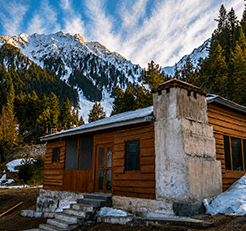
Sunset Light — Orange and Rose Alpenglow

At sunset, the process reverses: as the valley falls to shadow, Nanga Parbat holds the last orange light and transitions through rose to deep blue before nightfall. The meadow in foreground shadow with the peak lit above creates silhouette compositions unlike anything in the pre-dawn session. We position for both light events every day of the expedition.
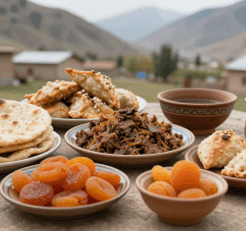
The Jeep Track Approach — Drama Photography

The 14-km unpaved mountain track from Raikot Bridge to Tato Village is itself a subject: vertiginous drops, dramatic valley views, rough terrain, and the scale of the approach. For those interested in travel documentary photography, the jeep track and the community of Tato Village offer compelling human-and-landscape subjects.

Destinations You'll Explore

Day-by-Day Itinerary

Every day is planned around the light — not sightseeing order. Alpenglow first, treks during midday, sunset last.

Day 1: Islamabad — Depart North

Depart Islamabad by private vehicle. Travel photography on the KKH approach — the Indus Gorge, the transition into Gilgit-Baltistan, the first distant views of Nanga Parbat’s southern massif. Overnight in Chilas with evening recce for any southern-face mountain shots.

Photography on the jeep approach track (request driver stops at key viewpoints). Forest trail walk to the meadow — shooting opportunities on the pine forest approach. Arrival at the meadow: first full view of Nanga Parbat. Late afternoon golden hour session on the meadow. Sunset alpenglow Session 1.

Pre-dawn alpenglow Session 2 at the primary meadow viewpoint. Morning: forest fringe photography. Afternoon: explore secondary meadow positions for the best wide-angle compositions. Evening: sunset Session 2 with wildflower foregrounds.

Pre-dawn alpenglow Session 3 (shorter, to preserve energy). Morning: rest and camera maintenance. Afternoon: walk to Beyal Camp (~3,500 m) — photography en route and at camp. Return to the meadow. Dinner. Begin astrophotography night session from 22:00 — Milky Way over Nanga Parbat from the best meadow position.

Full-day guided trek to Nanga Parbat Base Camp (3,962 m). Photography throughout the ascent: forest-to-moraine transition, Raikot Glacier view, Base Camp rock face compositions, and the summit perspective from the closest approach on this route. Return to meadow by late afternoon. Sunset Session 4.

Final pre-dawn alpenglow session: knowing the meadow positions well by now, this is often the most technically accomplished session of the expedition. After breakfast, final walk of the meadow before packing. Descend to Tato Village. Board jeeps to Raikot Bridge. South on KKH towards Islamabad.

Final drive south. Journey ends in Islamabad by evening.

Where You'll Stay

Premium Mountain Camp at Fairy Meadows

4 nights in a premium camp with a direct, unobstructed view of Nanga Parbat’s Raikot Face from the veranda. We pre-select the camp position for optimal photography angles. Full board — all meals included with evening briefings for next-day sessions.

Chilas Guesthouse

Overnight en route north and south. Best available accommodation in Chilas with an early-departure provision for the Raikot Bridge start.

Base Camp Lunch Rest Area

Lunch on the Base Camp trek day is provided at a designated rest area at approximately 3,700 m, with time for shooting in the midday light at elevation.

Where You'll Stay

Included

Not Included

Best Time To Take This Journey

July – August: Wildflower Season

Peak wildflower blooms create the best meadow foreground compositions. Most stable alpenglow conditions. Warmest nights for astrophotography comfort. Longest days. The prime photography window by a significant margin.

September: Autumn Light

Autumn larch colours add a warm golden palette to the forest trail and surrounding slopes. Crisp, clear light and fewer visitors in frame. An excellent alternative for those who want the meadow less crowded and prefer autumn colour palettes.

June: Pre-Season Light

Fresh green meadow, residual snow on higher terrain, fewer visitors. The wildflowers are not yet in full bloom but the light is exceptional and the atmosphere uncrowded. Suitable for experienced mountain photographers comfortable with variable weather.

Who This Journey Is For

Serious Landscape Photographers

The primary audience. Full scheduling around optimal light, multiple alpenglow sessions, a dedicated astrophotography night, and Base Camp access for a complete range of Fairy Meadows compositions.

Travel Photographers

Those wanting not just mountain shots but the full documentary arc — jeep track, Tato Village, forest trail, camp life, and the mountain throughout different light conditions.

Astro Photographers

The astrophotography night session and zero light pollution make Fairy Meadows one of Pakistan’s best Milky Way locations. The Nanga Parbat silhouette foreground is unique in South Asia.

Photography Workshop Groups

Small private photography groups (2–6 people) wanting a structured mountain photography expedition with guide support, position scouting, and scheduled sessions.
Start Planning This Journey

Information we need to confirm your tour.

indicates required fields

Traveler Information

Related Journeys

Luxury Hunza Escape

6 Days • Private Luxury Journey

A private luxury Hunza Valley tour package focused on premium resorts, signature viewpoints and an unhurried pace — ideal for travelers who want Hunza’s best sights without a packed schedule.

Hunza Honeymoon Escape

5 Days • Private Honeymoon Journey

A romantic Hunza Valley tour package built around sunset viewpoints, private boat rides and candlelight dinners for couples and newlyweds.

Signature Hunza Collection

8 Days • Flagship Private Journey

Our most complete Hunza Valley tour package — forts, lakes, Naltar Valley and Khunjerab Pass in one comprehensive 8-day itinerary.

Frequently Asked Questions

What are the best photography subjects at Fairy Meadows?

The primary subjects are: the Raikot Face of Nanga Parbat in alpenglow light (pre-dawn pink-gold and sunset orange-rose), the wildflower meadow foregrounds in July–August, the ancient pine forest in dappled morning and evening light, the Raikot Glacier and Base Camp rock-and-ice landscape, and the high-altitude night sky above the meadow (excellent Milky Way conditions with zero light pollution). Secondary subjects include the dramatic 14-km jeep approach track, Tato Village life, and alpine stream reflections in the forest.

Alpenglow is the phenomenon where high mountain peaks catch direct sunlight before the valley below is illuminated — and again after the valley falls to shadow at sunset. At Fairy Meadows, Nanga Parbat (8,126 m) glows vivid pink and gold for 20–40 minutes each pre-dawn and sunset. This is the signature light of Fairy Meadows and the single most sought-after photography condition at this location. We schedule every alpenglow session with you at the optimal meadow viewpoint.

A wide-angle lens (14–24mm full-frame equivalent) is essential for the meadow foreground-to-mountain compositions and for the pine forest interior. A mid telephoto (70–200mm) is extremely useful for compressing the mountain above the meadow and isolating portions of the Raikot Face. A standard zoom (24–70mm) covers most travel photography on the approach. Dedicated astrophotographers will want a fast wide prime (14mm or 20mm f/1.8 or faster) for Milky Way sessions.

Yes — Fairy Meadows is one of the finest astrophotography locations in Pakistan. At 3,300 metres with zero artificial light pollution, on a clear new-moon night the Milky Way core is visible overhead with Nanga Parbat as the foreground. We schedule a dedicated astrophotography night session as part of this expedition package, with the guide identifying optimal positions on the meadow for the Milky Way-over-mountain composition. Bring a fast wide prime and a sturdy tripod.

The primary viewpoint is the open meadow itself, facing north-northwest towards the Raikot Face. The eastern edge of the meadow offers the best angle for the classic full-mountain composition. The pine forest below the meadow provides foreground options (trees + mountain) in the early morning when the forest is backlit. At Beyal Camp (~3,500 m), you shoot from an elevated angle with the mountain wall closer and more vertical in frame. The Base Camp moraine gives a glacier-in-foreground composition unavailable from the meadow.

July–August for wildflower foregrounds (peak bloom) and stable alpenglow conditions. This is the prime season. September for autumn colours on the larches and surrounding slopes, with fewer visitors in frame and crisp clear light. Late June for greener, rain-fresh meadow conditions before the main tourist season. May can have residual snow on the upper trail, which adds a winter element to compositions but reduces access to higher positions.

Most premium camps have solar charging available. Bring a multi-port USB charging hub and charge all batteries each night at camp. The solar supply is limited, so prioritise camera batteries over non-essential devices. Cold temperatures at altitude drain batteries faster than at sea level — carry at least 3 fully charged batteries per camera body and keep spares in an inside jacket pocket to maintain temperature. Bring a portable power bank as backup.

We do not provide artificial lighting equipment. This is a natural-light expedition. However, we have reflectors available on request for portrait or product shots in the field. All our photography sessions are timed around natural light conditions — we track weather forecasts daily and adjust session times based on cloud conditions, wind, and the forecast clarity window.

Fairy Meadows attracts photographers throughout its season, particularly in July–August. However, the meadow is large enough that the primary viewpoints are not typically crowded at pre-dawn (most casual visitors are not awake at 4:30–5 AM for alpenglow). We know the quieter viewpoints and angles that position your compositions away from other visitors. The expedition package is 100% private — your guide is dedicated to your shooting schedule, not a group timetable.

Yes. The Photography Expedition includes a full day at Nanga Parbat Base Camp (3,962 m) specifically for its unique compositions — Raikot Glacier foreground, the full Raikot Face from a closer angle, and moraine landscape photography unavailable from the meadow. We schedule the Base Camp day for optimal weather and carry all gear needed for the trek. The trekking permit is included.

A sturdy carbon-fibre travel tripod is strongly recommended for the alpenglow and astrophotography sessions. Wind on the meadow at night and pre-dawn can be significant, so ensure your tripod can handle the conditions with a ballhead that locks firmly. A lightweight monopod is useful on the Base Camp trek where carrying a full tripod is more demanding. We carry a small portable sandbag for additional tripod stability on the meadow.

The Photography Expedition is designed to maximise shooting time. Over 4 full days at Fairy Meadows, you have: 4 pre-dawn alpenglow sessions, 4 sunset sessions, 1 dedicated astrophotography night session, full access to the Base Camp (1 day) and Beyal Camp (1 day) during midday and late afternoon light, and unlimited meadow time throughout. This is substantially more than the Classic tour and is the correct package for serious photographers.

Historic cultural destination in Pakistan

Plan Your Photography Expedition

Share your camera kit, dates, and photography goals — we’ll match the itinerary to your objectives.

Start planning a private Pakistan tour