Quick answer
In autumn 2026, a group of 12 travellers from the USA and Australia toured Skardu and Hunza with Tours in Pakistan. In their Google reviews they called Skardu "adventurous", Hunza "exceptional" and "a blessed and special place", said the drivers were "very skilled" on the mountain roads and that they "felt very safe the whole time". Below are their reviews in full, what made the trip work for a group of 12, and honest advice for other foreign travellers, including what government travel advisories say.In this article
- Who travelled, and where they went
- In their own words: the full reviews
- What stood out for our guests
- Photos from the trip
- Day by day: the Skardu and Hunza itinerary
- Why autumn worked so well
- Planning northern Pakistan for a group
- Honest advice for US and Australian travellers
- Frequently asked questions
Who travelled, and where they went
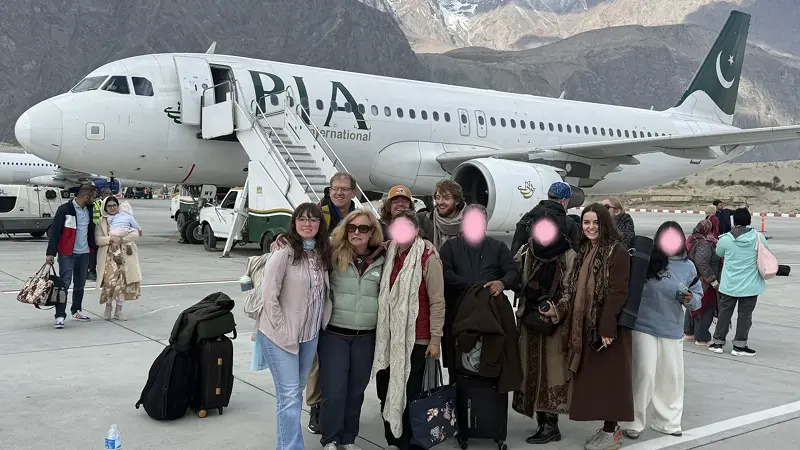
At the end of October 2026, twelve guests from the United States and Australia arrived at Islamabad International Airport. They travelled as one private group, at a sensible pace, with our team looking after the details from arrival to departure.
From Islamabad, the group flew to Skardu, landing among snow-capped Karakoram peaks. They spent their first days in Baltistan, then travelled by road into the Hunza valley and up towards Passu, before returning to Skardu for their flight home. It is one of our favourite routes for first-time visitors: two very different mountain regions, connected by one of the most dramatic road journeys in Asia.
In their own words: the full reviews
These reviews were left by two of the guests on our Google Business Profile. We have reproduced them exactly as written, with their permission and first names only.
"As a group of 12, travel can be a challenge. TIP worked very hard to provide the best experiences and at good price. Our time in Skardu was adventurous and Hunza was exceptional. TIP is flexible, professional, and friendly. “Maddi” Muddabir was really attentive to details making sure each person was well accommodated."
Gil, Google review, November 2026
"I joined a group tour to Hunza and Skardu with Maddy and his team. Maddy is so friendly and always happy to answer any questions about the area and Pakistan in general. All of the drivers were very skilled navigating the crazy roads and we felt very safe the whole time. Everything was organized for us from the moment we arrived at the airport in islamabad to the rest of the trip, so all we had to do was enjoy the amazing scenery.. Hunza is a blessed and special place, I would not miss it ❤️"
Jane, Google review, November 2026
Muddabir, whom guests call "Maddi" or "Maddy", is the member of our team both reviews mention by name.
What stood out for our guests
1. Feeling safe on the mountain roads
Jane wrote that the drivers were "very skilled navigating the crazy roads" and that the group "felt very safe the whole time". That matters, because the roads of Gilgit-Baltistan are the part of the trip most foreign visitors worry about. The road between Skardu and Gilgit follows the Indus gorge with steep drops, and the Karakoram Highway into Hunza is cut into mountainsides that shed rock after rain.
What keeps people safe is not luck. We use drivers who have spent years on these roads, keep to daylight hours, check road conditions every morning with local contacts, and build buffer time into the plan so nobody feels pressured to push on when conditions change.
2. Everything organised from the moment they landed
"Everything was organized for us from the moment we arrived at the airport in islamabad to the rest of the trip, so all we had to do was enjoy the amazing scenery." For international guests, this is the real value of a local operator. Domestic flights to Skardu are weather dependent, hotel standards vary widely, and checkpoints ask foreign visitors for documents. When those details are handled by someone who knows the system, travellers can relax.
3. Personal attention in a group of 12
Gil opened his review with a point every group organiser understands: "As a group of 12, travel can be a challenge." Twelve people means twelve sets of expectations, dietary needs, energy levels and luggage. His comment that each person was "well accommodated" reflects work that guests rarely see: matching rooms, splitting vehicles sensibly, adjusting the pace when someone needs a slower day, and answering questions at every stop.
4. Flexibility
Gil described the team as "flexible, professional, and friendly". Flexibility is not a slogan in the mountains; it is a requirement. Flights can be delayed, roads can close for a few hours, and the best light at a viewpoint does not wait for a timetable. A private itinerary lets us change the order of days without losing anything important.
5. Skardu's adventure and Hunza's warmth
The two regions left different impressions. Skardu, with its wide valleys, cold desert and huge peaks, felt "adventurous". Hunza, with its terraced villages, orchards and forts, felt "exceptional" and, in Jane's words, "a blessed and special place". That contrast is exactly why we recommend seeing both on a first trip.
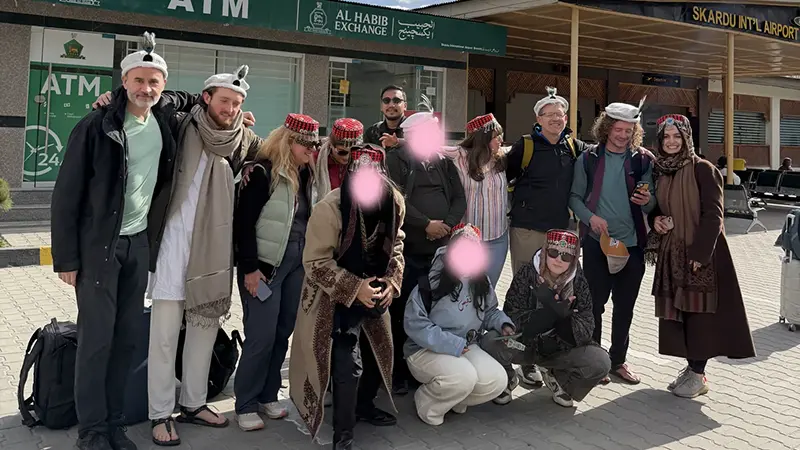
Photos from the trip
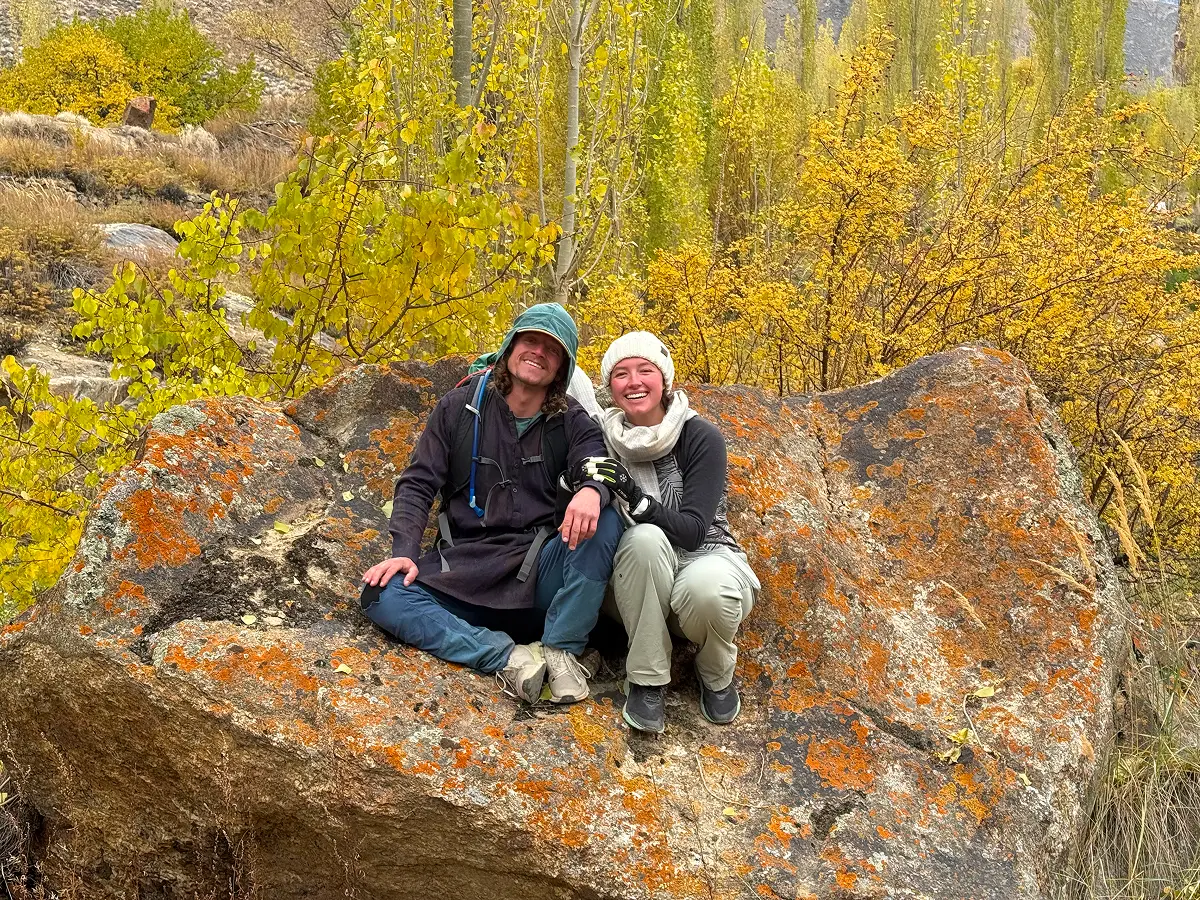
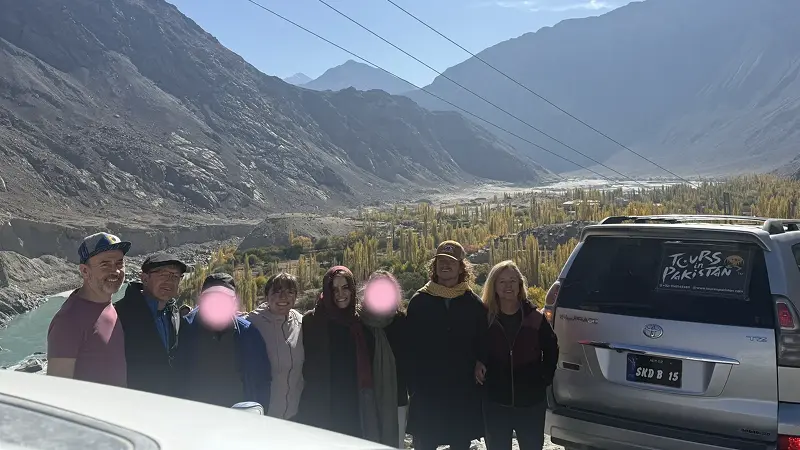
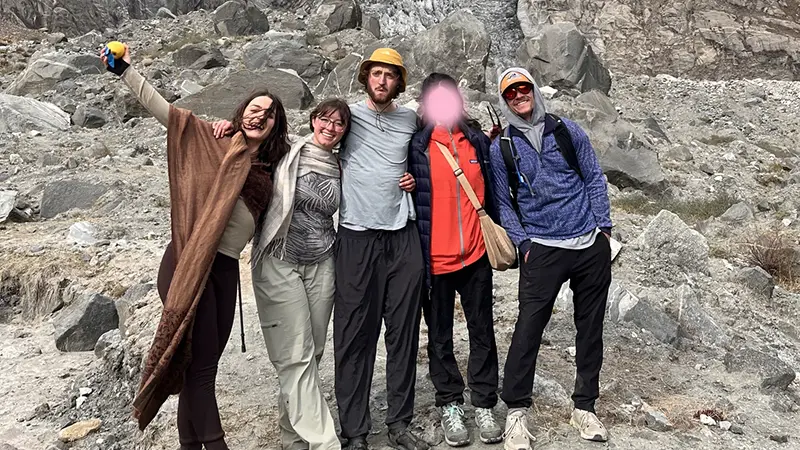
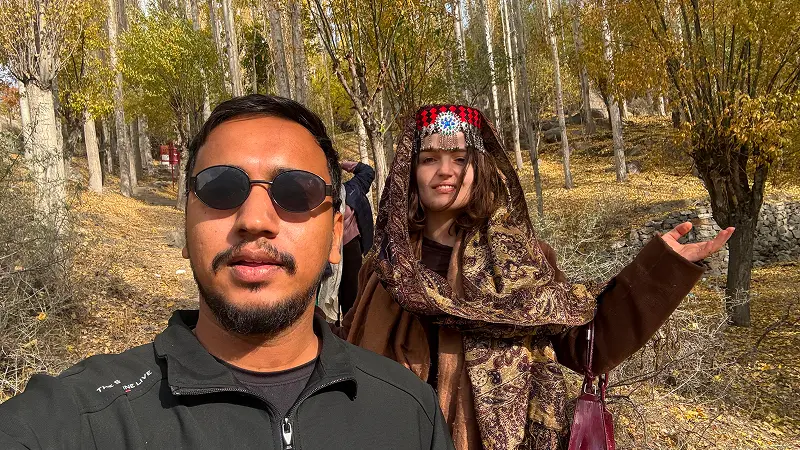
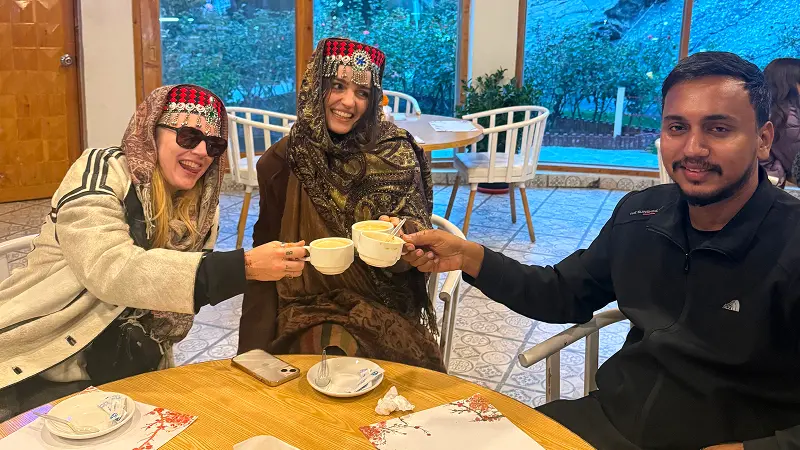
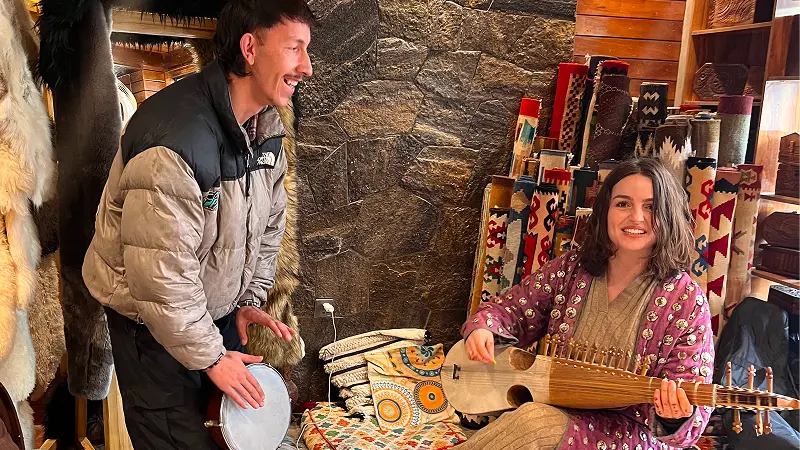
A few moments from the group's journey through Skardu and on to Hunza, from arrival day to the autumn roads of Gilgit-Baltistan.
Day by day: the Skardu and Hunza itinerary
The group split their time between two bases, Skardu and Hunza. Every private trip is shaped around the guests, but this is the 10-day itinerary we use for this route, following the same pattern as their trip: fly into Skardu, explore Baltistan, cross to Hunza by road, then return to Skardu for the flight home.
| Day | Route | Highlights | Overnight |
|---|---|---|---|
| 1 | Arrive in Islamabad | Airport welcome, rest, trip briefing; Faisal Mosque if time allows | Islamabad |
| 2 | Fly Islamabad to Skardu (about 1 hour) | Karakoram views from the plane, Shangrila and Lower Kachura Lake | Skardu |
| 3 | Shigar valley | Shigar Fort, old Balti villages, sunset at the Katpana cold desert | Skardu |
| 4 | Around Skardu | Upper Kachura Lake, Kharpocho Fort, the Manthal Buddha Rock, Skardu bazaar | Skardu |
| 5 | Skardu to Hunza by road (a full day) | The Indus gorge, the meeting of the Indus and Gilgit rivers, tea among autumn trees near Gilgit | Hunza (Karimabad) |
| 6 | Central Hunza | Baltit Fort, Altit Fort and garden, sunset at Eagle's Nest above Duikar | Hunza |
| 7 | Upper Hunza (Gojal) | Attabad Lake, Hussaini suspension bridge, Passu Cones, Borith Lake | Hunza |
| 8 | Nagar and Rakaposhi | Rakaposhi viewpoint, Nagar valley, or a slow day in Karimabad's orchards and cafes | Hunza |
| 9 | Hunza to Skardu by road | Last views of the Hunza valley and the Indus gorge | Skardu |
| 10 | Fly Skardu to Islamabad, onward flights | Farewells at Skardu International Airport | Departure |
Skardu: the adventurous half
Skardu sits in a wide valley at about 2,230 metres, surrounded by some of the highest mountains on earth. Its landscape is stark and dramatic: sand dunes in the Katpana cold desert, turquoise lakes at Kachura, and the restored 17th-century Shigar Fort. It is easy to see why Gil called this part of the trip "adventurous". Read more in our Skardu guide.
The road between them
The drive from Skardu to Hunza is a long but unforgettable day along the Indus gorge, where the river cuts through sheer rock walls, before joining the Karakoram Highway near Gilgit and climbing into Hunza. In autumn, the poplars along the way turn gold, as you can see in the group photo above. Experienced drivers, an early start and plenty of stops make it comfortable.
Hunza: the exceptional half
Hunza, at about 2,400 metres around Karimabad, is greener and gentler: terraced fields, apricot and apple orchards, ancient forts and views of Rakaposhi and Ultar. Further north, Attabad Lake, the Passu Cones and the Hussaini bridge are the highlights of upper Hunza. This is where Jane felt she had found "a blessed and special place". Read our Hunza Valley guide.
Why autumn worked so well
This group travelled at the end of October and the start of November, and the photos show why autumn is one of the best seasons in the north. The poplars and fruit trees turn yellow, orange and red, the summer crowds have gone, and the skies are often clear for days. Mornings and evenings are cold, so warm layers are essential, and some high areas such as Deosai and Khunjerab Pass are closed or close to closing by then. For travellers who want colour, calm and comfortable walking weather in the valleys, late September to early November is hard to beat.
Planning northern Pakistan for a group
Gil's group of 12 is a good size for a private trip, but it needs more planning than a couple travelling alone. What we do for groups:
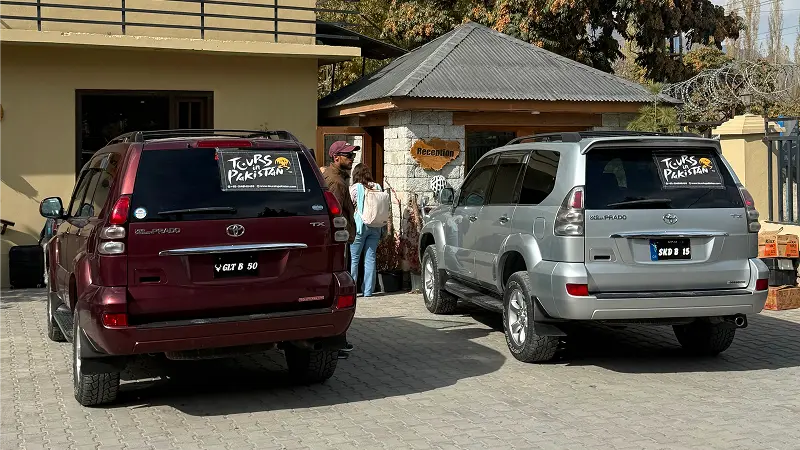
- Vehicles: two or three comfortable vehicles rather than one large coach, so the group can move at different speeds and use narrow mountain roads safely.
- Hotels: properties that can give the whole group rooms together, with confirmed heating and hot water.
- Flights: group bookings on domestic flights, with a backup road plan if flights are cancelled.
- Pace: a rhythm of long days followed by easier days, so nobody burns out.
- A dedicated lead: one person who travels with the group, solves problems before they grow, and answers the hundred small questions that come up.
If you organise trips for a club, a university group, a church or a group of friends, we are happy to talk it through. See Pakistan tours for foreigners.
Honest advice for US and Australian travellers
We would rather you come prepared than surprised. Before booking a trip to northern Pakistan:
- Read your government's advice. The US State Department currently rates Pakistan as Level 3, Reconsider Travel. The UK government advises against all but essential travel to Gilgit-Baltistan, and Canada advises against travelling to Gilgit-Baltistan by road. Australia's Smartraveller also carries warnings for Pakistan. These advisories can affect your travel insurance, so read them before you book.
- Check your insurance. Make sure your policy covers the regions you will visit, mountain roads and emergency evacuation.
- Get your visa early. Americans and Australians can apply for a Pakistan e-visa online.
- Register and carry documents. Foreign visitors may need to register with local authorities in Gilgit-Baltistan and show passports at checkpoints. Your operator should help.
- Build in buffer days. Weather can cancel flights and close roads.
- Travel with people who know the ground. That is the single biggest factor in how safe and enjoyable a trip feels, as our guests' reviews show.
Reviews are quoted exactly as posted on the Tours in Pakistan Google Business Profile, with permission and first names only. Travel advisory information reflects official sources as of November 2026: US State Department · UK FCDO · Government of Canada · Australia Smartraveller. Related: Hunza Valley · Skardu · Pakistan tours for foreigners